Essentially:
• Relationship therapy in Altamonte Springs focuses on teaching couples structured communication tools like active listening, “I” statements, and non-defensive responses.
• Sessions use an impartial therapist as a neutral guide so both partners feel heard without the conversation turning into a debate over who is right.
• Skills learned in session are meant to carry into daily life, reducing recurring arguments and rebuilding trust over time.
Couples who struggle with repeated misunderstandings or feel unheard by a partner can benefit most from therapy centered on direct, practical communication training rather than general talk therapy. relationship therapy in Altamonte Springs, FL, is built around this idea: teaching partners specific, repeatable skills they can use outside the therapy room, not just processing feelings during a session.
Research consistently shows that how couples talk to each other, not just what they argue about, predicts relationship stability. According to Gottman Institute research, practicing active listening, reflecting back what is heard, and using “I” statements helps partners avoid sounding accusatory and reduces escalation during conflict.
Why Communication Is the Starting Point
Most couples do not arrive in therapy because they stopped loving each other. They arrive because the same conversations keep breaking down in the same ways.
The basis of any great relationship is effective communication, and one of the main focuses of relationship therapy is building effective communication skills so partners learn to actively listen and appropriately express their feelings, expectations, and desires. This framing treats communication as a learnable skill set rather than a fixed personality trait, which is part of why it works across different relationship stages.
Common patterns addressed early in sessions include:
• Interrupting or formulating a rebuttal while a partner is still speaking
• Raising voice or shutting down instead of pausing a heated conversation
• Making assumptions about a partner’s intent instead of asking directly
• Avoiding difficult topics until resentment builds
Core Skills Taught in Session
Communication-focused couples work tends to repeat a small set of concrete techniques rather than abstract advice.
1. Active listening – giving full attention and reflecting back what a partner said before responding.
2. “I” statements – expressing feelings without framing them as blame or accusation.
3. Soft startups – opening a hard conversation without criticism or contempt baked into the first sentence.
4. Taking a pause – stepping back when a conversation becomes too heated to be productive, then returning to it.
Gottman Institute guidance notes that practicing active listening, showing empathy, using “I” statements, and paying attention to both words and nonverbal cues helps partners avoid misunderstandings and build deeper trust. It is worth noting that researchers have also found nuance here: later analysis reframed active listening as one tool among several, alongside accepting a partner’s influence and repairing conflict early, since teaching communication alone does not automatically save a struggling relationship. This is one reason therapy pairs communication training with broader relationship work rather than treating it as a standalone fix. For readers who want a broader clinical perspective on relationship and family functioning, the American Psychological Association’s resources on healthy relationships offer additional evidence-based context.
How Sessions Apply These Skills
An Impartial Setting for Practice
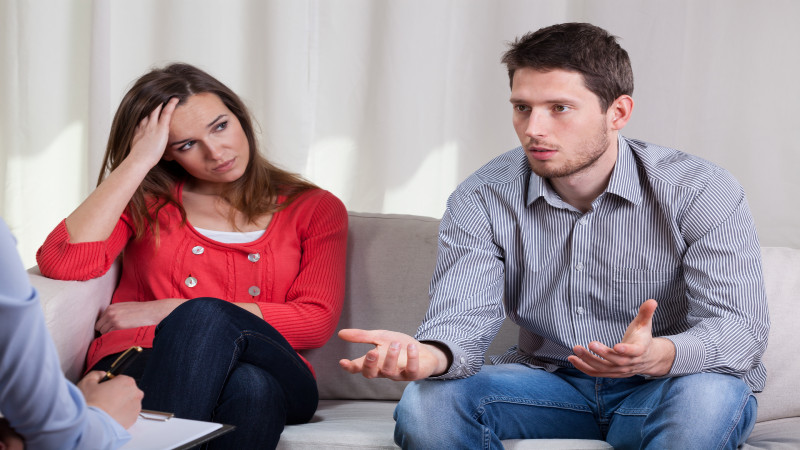
Therapists remain impartial and give honest, unbiased feedback to both partners, looking at the relationship through a fresh lens so couples counseling becomes about understanding each other’s point of view rather than deciding who is right, with both people’s reality heard and a way forward provided. This neutral structure gives couples a low-pressure setting to practice new communication habits before using them at home.
| Skill Focus | What It Addresses | Where It Shows Up |
| Active listening | Feeling unheard or dismissed | Daily check-ins, conflict discussions |
| “I” statements | Blame cycles and defensiveness | Arguments about chores, finances, time |
| Soft startups | Conversations that escalate fast | Bringing up sensitive topics |
| Scheduled pauses | Flooding or shutting down | High-tension disagreements |
Frequently Asked Questions
How long does it take to see communication improve? Timelines vary by couple, and no specific duration can be promised, since progress depends on consistency practicing the skills outside of sessions as well as inside them.
Is this only for married couples? Services are built for couples wanting to connect more deeply and resolve conflicts, whether married, engaged, or newly living together.
What if one partner communicates very differently than the other? Therapy sessions are designed to give both perspectives equal space, with the therapist helping translate differing communication styles into mutual understanding rather than favoring one approach.
Does better communication guarantee fewer arguments? Not entirely. Communication training reduces how often conflict escalates and helps partners feel understood, but it works best as part of a broader set of relationship habits rather than a single fix.
Couples looking for structured, skills-based relationship support in the Altamonte Springs area can find services described directly through Togetherness Counseling. practice information, where communication-focused couples therapy is listed as a core offering alongside related family and individual services.