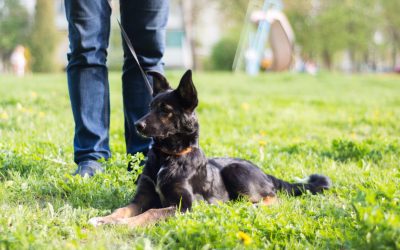
At glance:
• Puppy training builds foundational obedience, house manners, and socialization skills during a dog’s early developmental window.
• In-home training methods let puppies learn in the environment where behaviors actually need to happen.
• Look for trainers who use positive, relationship-based methods rather than harsh correction tools.
Finding the right puppy training services in Boca Raton, FL, means looking past generic obedience classes and identifying a program built around your puppy’s early developmental stage. The goal is consistent, humane guidance that shapes good habits before problem behaviors take hold.
Puppies absorb social and behavioral cues fastest between roughly eight and sixteen weeks of age, which makes early, structured guidance important before unwanted habits form. Bark Busters Home Dog Training Boca Raton is one local option offering in-home dog training for puppies and adult dogs, and families researching puppy training services by Bark Busters often start by comparing how different providers structure their sessions and follow-up support.
What Puppy Training Actually Covers
A well-rounded puppy program addresses more than sit and stay. Most reputable services build lessons around the behaviors that affect daily life at home and in public.
• Basic obedience cues such as sit, stay, come, and loose-leash walking
• House training and crate training routines
• Bite inhibition and chew redirection
• Socialization with people, other dogs, and new environments
• Managing jumping, mouthing, and excessive barking
According to the American Veterinary Society of Animal Behavior, early socialization during the primary window before full vaccination is not only safe but important, since the behavioral risks of missing this period often outweigh the risk of illness when done thoughtfully. This is one reason many training providers emphasize starting socialization exercises early rather than waiting until a puppy completes every vaccine round.
In-Home Training Versus Group Classes
Families choosing between formats should weigh how each style fits their puppy’s temperament and their own schedule. Both approaches can work, but they solve different problems.
|
Factor |
In-Home Training |
Group Classes |
|
Environment |
Puppy’s actual living space |
Neutral training facility |
|
Distraction level |
Controlled, gradually introduced |
Higher, from other dogs and people |
|
Scheduling |
Often more flexible, one-on-one |
Fixed weekly class times |
|
Best suited for |
Anxious, reactive, or easily overwhelmed puppies |
Puppies needing structured group exposure |
In-home sessions allow a trainer to address specific triggers, such as a doorbell or a particular room, in the exact place where the behavior happens. Group classes, by contrast, are useful for puppies that need practice ignoring distractions and interacting calmly with unfamiliar dogs.
Questions to Ask Before Booking a Trainer
Not every training service operates the same way, so a short screening conversation can save time and money later. Ask providers direct questions before committing to a package.
1. What training philosophy and methods do you use, and are they force-free
2. Will the same trainer work with my puppy for every session
3. How do you handle follow-up support if a behavior does not improve
4. Can training accommodate multiple family members so cues stay consistent
Consistency across everyone in the household matters more than any single technique. A trainer who explains how to keep commands uniform between family members is generally a stronger long-term fit than one focused only on a single demonstration session.
Setting Realistic Expectations for Results
Puppy training is a gradual process, not a one-time fix. Most behaviors improve through repetition, patience, and short daily practice rather than a single class or session.
• Expect incremental progress over several weeks, not overnight change
• Reinforcement at home between sessions is often what determines long-term success
• Regression during adolescence, typically starting around six months, is common and does not mean earlier training failed
Owners who understand this timeline tend to feel less discouraged when a puppy has an off day. Training is cumulative, and small consistent efforts compound into reliable habits over time.
Frequently Asked Questions
At what age should puppy training start? Many trainers recommend beginning basic socialization and gentle obedience exposure as early as eight weeks old, since this is within the primary developmental window for learning.
Is in-home training more effective than a group class? Neither format is universally better. In-home training suits puppies needing focused, low-distraction practice, while group classes help puppies that benefit from supervised exposure to other dogs and people.
How long does it typically take to see results? Timelines vary by puppy and household consistency, but owners typically notice measurable changes in basic obedience and house manners within a few weeks of regular practice.
Do trainers work with specific breeds differently? Reputable trainers adjust pace and technique based on temperament and energy level rather than breed alone, since individual personality often matters more than breed generalizations.
Choosing among puppy training services in Boca Raton comes down to matching a program’s structure and philosophy to your puppy’s personality and your household routine. Bark Busters, available on Google Maps, is one local option to consider when comparing in-home training with group classes to find the right fit for your family.