Quick summary:
• A gravity conveyor roller moves products using slope and natural force, with no motor or power source required, making it one of the lowest-cost material handling options available.
• Key selection factors include roller diameter, frame material, load capacity, and whether your application is permanent or temporary.
• Arlington Heights facilities handling cartons, totes, or pallets are strong candidates for this system type.
The right gravity conveyor roller by Conveyor Systems & Engineering, Inc. can reduce manual handling, cut operating costs, and keep product flow consistent across distribution, manufacturing, and order fulfillment environments. Selecting the correct configuration for your facility takes more than picking a catalog item off a shelf.
How Gravity Roller Conveyors Work
Gravity roller conveyors function on the force of gravity or manual intervention, requiring no electric motors or other drive systems for material flow. Products are placed on rollers that are positioned at an angle for efficient movement.
Conveyor rollers that rely on gravity are an excellent choice for flat-bottomed boxes and products, and they are one of the most cost-effective solutions since they require no power or motors. Because there are no electrical components, gravity roller conveyors are often more affordable to install and maintain compared to powered conveyors.
Gravity conveyors are commonly found in warehouses, distribution centers, manufacturing plants, and shipping facilities, and are particularly useful for loading and unloading trucks, guiding items through sorting areas, and transferring goods between workstations.
Key Specs to Evaluate Before You Buy
Choosing the wrong roller spec for your load type is one of the most common mistakes facility managers make. Here are the primary variables to assess:
Roller Diameter Most rollers for gravity conveyor systems are 1.5 to 1.9 inches in diameter, though for extreme-duty applications, 2.5-inch and 3.5-inch diameters are available.
Frame Material Gravity roller frames are constructed from various steel and aluminum materials, with optional finishes including plain, pickled, galvanized, or painted.
Bearing Type Sleeve bearings are designed for powered and gravity applications without external lubrication, and self-lubricating plastic resin bushings are proven to deliver longer service life than lubricated rolling element bearings in many conditions.
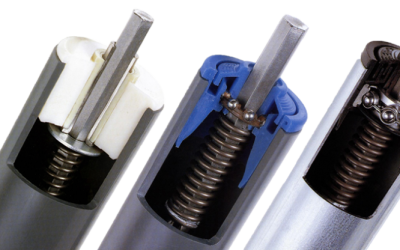
Product Contact Surface Gravity conveyor rollers feature free-rotating rollers that utilize gravity to transport products, and the rollers often consist of steel, aluminum, or plastic that support most light and medium weighted items.
Roller Spacing A minimum of three rollers should be beneath your product at any given time to maintain stable, controlled movement.
Gravity vs. Powered Roller: A Quick Comparison
|
Factor |
Gravity Roller |
Powered Roller |
|
Energy cost |
None |
Ongoing electrical cost |
|
Installation complexity |
Low |
Moderate to high |
|
Maintenance |
Minimal |
Regular motor/drive service |
|
Best load type |
Flat-bottomed cartons, totes, pallets |
Variable or heavy loads needing precise control |
One of the main reasons to consider a gravity conveyor is the cost savings associated with this type of system; when compared to powered roller or belt conveyors, a gravity conveyor can be a more economical solution, especially for shorter runs and turns.
Gravity roller conveyors can be used in both permanent and temporary setups, and they are often portable, making them easy to adapt for changing workflows or seasonal demands.
Safety and Compliance Considerations
Safety compliance is a non-negotiable part of any conveyor installation. OSHA, the federal agency responsible for ensuring safe and healthy working environments, has laid the foundations of conveyor safety standards found in 29 CFR 1910.22 and 29 CFR 1926.555, which address guarding, emergency stops, maintenance and inspection, lockout/tagout, training, material handling, electrical safety, and noise and vibration. Facilities in Arlington Heights should confirm their conveyor layout meets these requirements before commissioning any new line.
Gravity systems carry fewer mechanical hazards than powered conveyors, but rollers should meet and exceed OSHA standards to reduce vibration and extend the life of your conveyor systems. Proper guarding at transfer points and clear aisle markings remain important regardless of system type.
Gravity rollers are also customizable, allowing facility owners to equip accessories like pop-up tops, curves, hanging bricks, slide rails, and supports to fit specific floor plans and safety requirements.
FAQ
What products work best on a gravity conveyor roller?
Gravity roller conveyor systems are designed to carry light, medium, and heavy loads that have firm, flat bottoms such as cartons, totes, cases, skids, and drums.
Can gravity rollers handle inclines or curves?
Additional versatility can be achieved by adding optional curves and spurs to straight conveyors. Inclines typically require a powered assist; gravity systems work best on flat or slightly declined runs.
How much customization is available?
You can customize roller widths, leg supports, lengths, and heights to meet your specific operational needs.
Are gravity conveyor rollers suitable for temporary use?
Since gravity roller conveyors are not equipped with motors, they are lightweight, which means you can configure them for permanent or temporary setups.
For Arlington Heights facilities looking to streamline order picking, shipping, or receiving, a gravity roller system is worth serious consideration before investing in powered alternatives. Find Conveyor Systems & Engineering, Inc. on Google Maps to learn more about its conveyor solutions and discuss your load requirements, floor layout, and customization needs to find a system that fits your operation.